
HAMILTON PREMIERE
SAFE-HAVEN ASSETS
Investments & Wealth
Why Invest in Safe-Haven Assets?
Safe-haven assets are investments with tangible intrinsic value. The term “asset” is used here because these investments typically involve physical, tangible items. As a result, they are generally considered less vulnerable to fluctuations in financial markets and rising inflation, although their value is not immune to either.
Their value is often more resilient over time, even during periods of severe instability, such as geopolitical crises or wars. As the name suggests, safe-haven assets can provide a refuge for investors’ savings during difficult times.
They may be chosen with the aim of preserving wealth and seeking to:
1. Preserve capital by helping to maintain the value of an investment.
2. Potentially increase the value of an asset, offering the possibility of a gain when it is resold.
Safe-haven assets are therefore generally regarded as relatively stable investments. For this reason, they tend to attract greater interest during periods of economic turbulence or geopolitical uncertainty, when investors are looking to protect their wealth.
HAMILTON PREMIERE
Investing in Physical Gold Bullion
In a rapidly changing world, gold is once again taking centre stage in the global economic landscape.
This is about more than inflation or financial crises: a fundamental shift in the monetary paradigm is under way, driven by the BRICS countries (Brazil, Russia, India, China and South Africa), with other strategically important players such as Iran, Saudi Arabia, Egypt and the United Arab Emirates also becoming increasingly involved.
THE SHIFT OF PARADIGM
The gradual move away from the US dollar as the principal currency for international trade, particularly in the energy sector, is gathering pace. At the same time, demand is growing for physical gold as a tangible store of value.
An increasing number of oil-producing countries are challenging the dollar’s dominance, opting instead for payments in local currencies, Chinese yuan or, in some cases, physical gold.
Countries such as Russia and Iran have long conducted some oil and gas transactions outside the SWIFT system, using alternative currencies and payment arrangements.
China, one of the world’s largest consumers of gold, has been building up its gold reserves to strengthen the yuan’s position and support its long-term monetary strategy.
New strategic alliances among BRICS countries have also fuelled discussion around the creation of a common currency backed by gold, potentially reducing reliance on the US dollar as the world’s leading reserve currency.
A Multipolar System Built on Gold
Confidence in fiat currencies issued by Western governments,many of which face high levels of public debt and persistent inflationary pressures,is increasingly being questioned.
The BRICS countries, meanwhile, are working towards a more multipolar financial system, characterised by:
- Bilateral trade settled in local currencies
- Payment arrangements backed by physical gold Growth in national gold reserves
This evolving international monetary landscape is helping to renew global interest in gold as a tangible asset: a finite resource that cannot be created at will like fiat currency and does not depend on the solvency of a government or financial institution.
Investing in Classic Cars
HAMILTON PREMIERE
A brand OF hamilton HOLDING INTERNATIONAL ltd
Investing in classic cars offers an alternative asset class that can help diversify your portfolio. It can be a compelling strategy for pursuing potential returns over the medium to long term, while also offering a distinctive way to turn a passion for motoring into something more.
HAMILTON PREMIERE
Investing in Classic Cars
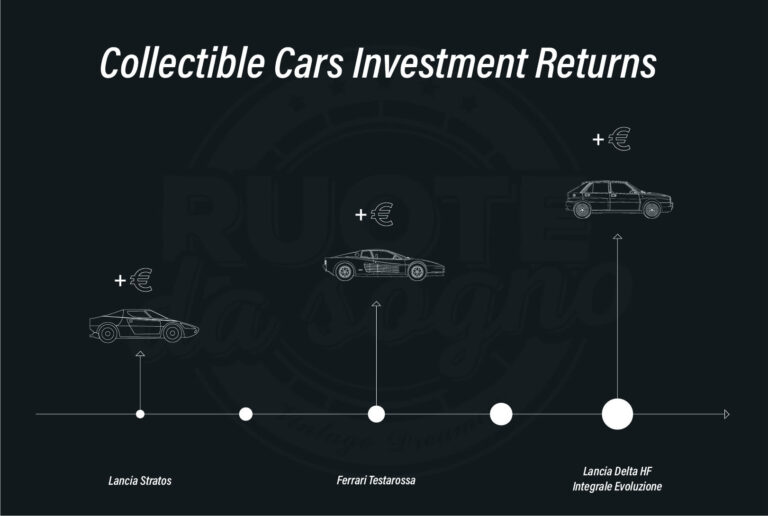
Auction data for some of the classic cars that have appreciated most in value reveals significant gains. In 2022, the Lancia Stratos saw its value rise by approximately 20% compared with 2019, doubling in value compared with 2012.
The Ferrari Testarossa, meanwhile, doubled in value between 2020 and 2022, with the “Monodado – Monospecchio” version recording an overall increase of approximately 150% compared with 2019.
Also in 2022, the Lancia Delta HF Integrale Evoluzione increased in value by around 40% compared with 2020. The Martini 5 and Martini 6 editions, in particular, recorded gains of approximately 150% compared with 2017.
Another important factor to consider is that classic cars can offer value beyond potential appreciation: they can be driven and enjoyed, while potentially benefiting from a more favourable tax treatment than other investment assets.
In other words, they represent a tangible asset that can be both owned and enjoyed.
Investing in classic cars can therefore offer more than the prospect of financial returns over the medium to long term. It can also be a strategic way to combine a passion for motoring with the potential to build wealth.
A well-diversified portfolio should include a balance of equities and bonds, while also considering alternative asset classes that may deliver positive financial and commercial performance over the long term.
Contrary to what some might expect, the classic car market has experienced substantial price growth in recent years, with increases of 218% across Europe and 257% in the UK, according to the figures cited. These figures suggest that the market has outperformed expectations.
According to research by leading organisations in the investment sector, including the Coutts Index and K500, collectible cars rank among the top five luxury assets for investment performance since 2005. In particular, classic cars, which fall within the broader category of collectible assets, had tripled in price by 2018 compared with 2005, making them one of the strongest-performing asset classes despite fluctuations in the financial markets.
Investing in Watches
HAMILTON PREMIERE
A brand OF hamilton HOLDING INTERNATIONAL ltd
Investing in watches offers an alternative asset class that can help diversify your portfolio. According to a recent study, the luxury watch market is forecast to grow at a compound annual growth rate (CAGR) of 3.25% over the next five years. This projected growth helps explain why luxury watches are attracting interest from investors seeking alternative investment opportunities.
Long regarded as symbols of prestige and refinement, luxury watches are often viewed, alongside gold and diamonds, as assets that may help preserve wealth during periods of economic uncertainty.
During the pandemic, for example, the value of luxury watches reportedly fell by just 8%, compared with a 19% decline in the S&P 500 stock market index. Yet a watch is far more than an alternative source of income.
Collectors understand that it is an accessory with a unique evocative and symbolic power.
Investments & Wealth
nvesting in Watches: The Safe-Haven Asset Concept
One of the defining characteristics of the stock market is undoubtedly its cyclical nature.
Economic systems go through periods of crisis, followed by recoveries that can bring renewed optimism for the future.
Recessions, however, can unsettle investors, who may be unsure how best to protect their capital during such uncertain times.
A safe-haven asset can be thought of as an anchor in a storm: a simple image that captures the importance of protecting wealth when markets are under pressure.
Safe-haven assets are investments that may help preserve capital during economic downturns. Gold, wine and watches, for example, can attract greater interest during periods of economic uncertainty, although their values do not always rise when the wider economy weakens.
The chart below, for instance, illustrates the upward trend in gold prices.
Investments & Wealth
Why Invest in Watches?
Investing in watches can offer interesting opportunities, and here is why.
Suppose you have around €10,000 to invest. With this budget, you could purchase a Rolex Submariner, the brand’s iconic diving watch, which has a stated retail price starting at €9,000.
Four years after purchasing it, you might be able to resell it for €10,800, representing a potential gain of 20% on the original purchase price.
Compare these figures with the interest rates offered by banks on current accounts, and it is easy to see why luxury watches attract the attention of investors. However, actual returns depend on the model, market conditions, transaction costs and the price achieved on resale.
You may be wondering what drives the value of certain watches higher over time.
Over the past two decades, we have witnessed a remarkable trend.
Prices for iconic watches from brands such as Patek Philippe, Omega, Blancpain, Audemars Piguet and Rolex have risen significantly, driven in part by growing demand and the relative scarcity of certain models.
Demand for the celebrated Patek Philippe Nautilus has, at times, been so strong that waiting lists have closed. Meanwhile, buyers seeking an Audemars Piguet Royal Oak 15202 have historically faced lengthy waiting times for a model with a stated retail price of €28,000.
These are, of course, exceptional timepieces. Often crafted with a high degree of precision and expertise, they feature movements developed through years of research and development and may incorporate premium materials such as gold and platinum.
But is craftsmanship alone responsible for their appeal?
Some market observers point to what is sometimes described as artificial scarcity: limiting production can make certain luxury watches harder to obtain and may contribute to higher prices.
This is not necessarily an anomaly; it reflects the basic economic principle of supply and demand.
The growing number of watch enthusiasts has also helped stimulate the pre-owned market, contributing to price increases for selected models.
According to a market forecast cited in the source material, the luxury watch market is expected to record a compound annual growth rate (CAGR) of 3.25% over the next five years. This projection reflects anticipated market growth, although it does not guarantee investment returns for individual watches.
Still not convinced? Here are two further factors to consider:
Portfolio diversification: Luxury watches can represent an alternative asset class that may help diversify an investment portfolio. A balanced strategy across different asset classes can help manage risk and support long-term financial objectives.
Potential for capital appreciation: Certain watches have achieved substantial price increases over time, although performance varies considerably by brand, model, condition and purchase price.
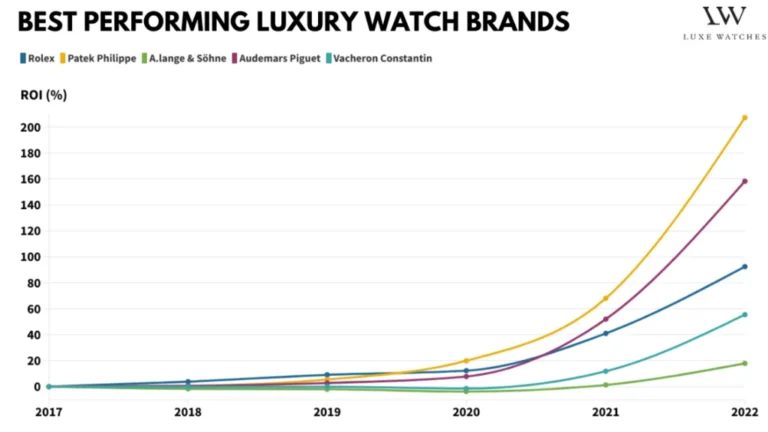
Let us take a closer look at this second point. Return on investment (ROI) measures the profitability of an investment—in simple terms, the gain or loss generated relative to the amount invested.
“You never actually own a Patek Philippe. You merely look after it for the next generation.”
This famous slogan from the renowned Swiss watchmaker captures the emotion and heritage associated with a timepiece that continues to embody style and elegance across generations.

As illustrated, the source data indicates an ROI of 90% for Rolex, while Audemars Piguet and Patek Philippe are reported to have achieved returns exceeding 150% over a five-year period.
These figures are certainly noteworthy, but historical performance should always be considered in context. Results vary across models and time periods, and past returns are no guarantee of future performance.
A carefully selected watch may offer the potential for capital appreciation, even during periods of market uncertainty. However, achieving favourable long-term results while managing risk requires a thorough understanding of individual models, market dynamics and an appropriate investment strategy.
Investing in luxury watches, however, is about more than portfolio diversification.
Long associated with prestige and longevity, a watch marks the passage of time, conveys a sense of status and preserves a tangible connection to the past—an object that can be cherished and passed down through generations.
In the world of horology, emotion plays a central role in purchasing decisions. Following a period of negative performance in the cryptocurrency market, watch prices also began to soften amid broader international uncertainty. Nevertheless, some models continued to hold their value, while others recorded significant gains.
Investments & Wealth
Investing in Vintage Watches: The Pre-Owned Market
n recent years, interest in investing in luxury vintage watches has grown considerably. Models such as the Rolex GMT-Master and the Omega Speedmaster illustrate the appeal of timepieces that have gained value over time.
A vintage watch is more than a wristwatch: it can become a highly sought-after collector’s item and a symbol of prestige that may be difficult to replicate with modern models.
Buying a vintage timepiece, however, means entering the pre-owned market. Purchasing from a reputable authorised dealer can offer additional safeguards, whereas private sales require greater care and due diligence. Buyers should be aware of the risks involved, including authenticity, condition, provenance and the possibility of overpaying.
Investing in Fine Art
HAMILTON PREMIERE
Ph. Courtesy of CAROLINA MAZZOLARI
A brand OF hamilton HOLDING INTERNATIONAL ltd
Art collectors are different from conventional financial investors, who focus primarily on financial growth. Those who invest in art tend to have a more discerning and sensitive appreciation of beauty and culture. This perspective is essential when choosing works that offer not only the potential for financial appreciation, but also an emotional connection that goes far beyond market fluctuations.
HAMILTON PREMIERE
Investing in Fine Art
Art collectors are not simply financial investors focused solely on economic growth. Those who invest in art often have a more sensitive, discerning outlook, which is important when making investments that inspire emotion as well as offer the potential for financial appreciation. Whether the focus is on Old Masters or contemporary works, selecting pieces with lasting artistic significance is essential.
nvesting in art is a sophisticated strategy that combines passion with financial foresight. Over the centuries, art has demonstrated remarkable resilience, retaining and often increasing its value even during periods of considerable economic uncertainty. For this reason, it is increasingly regarded as a potential safe-haven asset.
When financial markets fluctuate and currencies become less stable, discerning investors look to alternative assets. Art fits naturally into this category, as its value is not directly tied to movements in traditional financial markets.
Investments & Wealth
An Investment That Speaks to the Present While Looking to the Future
Every work of art is unique, and this very uniqueness can contribute to its long-term value. Art also offers an emotional dimension that few other investments can provide. It is not simply about figures or returns; it is about living alongside something beautiful, meaningful and inspiring every day.
Works of art enrich spaces, create identity and tell stories. At the same time, they can build lasting value.
From a strategic perspective, including art in a portfolio can provide diversification and may help spread investment risk. It may also offer a degree of protection against inflation and economic instability, although this is not guaranteed. In recent years, the art market has attracted growing interest. New collectors, digital platforms and international auctions have made the sector more accessible. Investing in art is no longer the preserve of a select few, although a knowledgeable and considered approach remains essential.
Market knowledge is what can turn a purchase into a well-informed investment. Provenance and authenticity are equally crucial. Documentation, certificates of authenticity and the history of a work can all have a direct impact on its value.
Investing in art also requires a long-term perspective. It is rarely a route to immediate returns; rather, it is about building value gradually over time.
It calls for patience, but may offer significant potential. In an increasingly volatile world, art can provide a point of balance, a meeting of beauty and strategy, passion and rational judgement.
Choosing art as a potential safe-haven asset means investing in something whose cultural and emotional significance can endure. Because the value of art reaches beyond time and transcends the markets.
Investments & Wealth
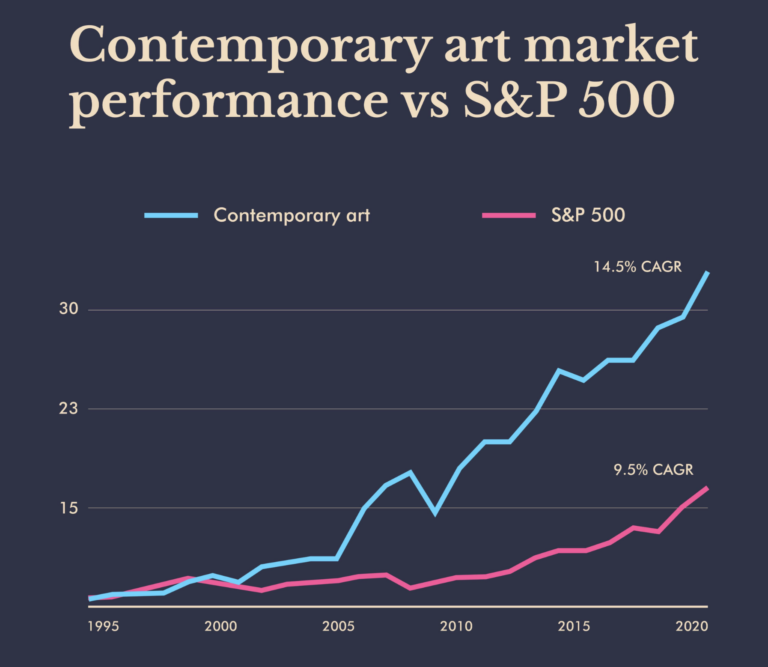
Art does not follow the same rules as the financial markets.
t is a tangible, concrete asset that can be owned, enjoyed and passed down through generations. A work of art is more than an investment: it is a cultural legacy. Each piece is unique and irreplaceable, carrying its own history, identity and symbolic significance. This sets art apart from other financial assets.
Over time, emerging artists can become established names in the art world. What may appear to be a speculative purchase today could develop into a significant asset in the future.
Investors who can identify promising talent before it gains wider market recognition may achieve exceptional returns. However, works by established artists can also represent an attractive option. Their value is supported by established demand and international recognition. In these cases, an investment may offer greater stability, with the potential for gradual, sustained appreciation.
Another key factor is scarcity. Unlike many other goods, original works of art cannot be mass-produced.
Hamilton Premiere
YOUR PASSION HAS A NEW STARTING POINT
A BRAND OF HAMILTON HOLDING INTERNATIONAL LTD
- +44 (0) 2079684943
- [email protected]
- Devonshire House
- 1 Mayfair Place, London
- W1J 8AJ United Kingdom